
"the most ideal"
7000 article(s) found

Costa Rican Coffee Grinding Variety with full grains and ideal acidity manor price taste
Coffee was introduced into Costa Rica from Cuba in 1729. Today, its coffee industry is one of the well-organized industries in the world, with a yield of 1700 kg per hectare. Costa Rica has only 3.5 million people but 400m coffee trees, and coffee exports account for 25 per cent of the country's total exports. The volcanic soil of Costa Rica is very fertile and well drained, especially in the central part.

North Italian baking "taste buds first" the combination of "ideal and fantasy"
Coffee knowledge starts with mixed beans when we talk about roasting espresso beans in coffee knowledge, we are actually talking about the science of mixed beans. The highest sweet spots of all kinds of coffee beans from different countries appear at different baking points, so bakers must find a balance between baking and mixing beans in order to make a good cup of espresso. The first thing to learn is to learn.

Uncle Dou, who only knows how to make coffee: he didn't make any money but enjoyed it very much.
Interviewing Uncle Dou in Uncle Dou's Haofang Cafe, not surprisingly, he has the talkative style of Beijingers. As a watcher who adheres to the ideal of coffee, he does not want to add luster to his story, and even disdains to decorate himself with words. He will politely admit that he is a little idealistic, but when it comes to his obsession with coffee, his statement is a bit unexpected: except for this.
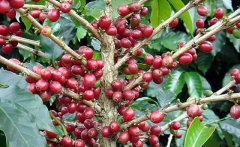
Costa Rican coffee has full particles, ideal acidity and unique strong flavor.
High-quality Costa Rican coffee is called extra hard beans, and this kind of coffee can grow at an altitude of more than 1500 meters. Altitude has always been a problem for coffee growers. The higher the altitude, the better the coffee beans, not only because the higher altitude can increase the acidity of the coffee beans and thus increase the flavor, but also because the night temperature at the higher altitude is lower, the trees can grow slowly.

Costa Rican Yerzaro Coffee Flavor description with ideal acidity introduction of fine coffee in producing area
All the coffee trees planted in Costa Rica are Arabica coffee trees. through improvement, the quality of coffee beans is better and more stable. in order to facilitate picking, coffee trees are kept at a height of about 2 meters through continuous pruning. The coffee that people eat is the taste of the seeds in the fruit that are brewed in water. After picking raw coffee beans, the peel, pulp, seed film and sun exposure must be removed.

The natural environment in which coffee trees grow. Planting conditions of coffee trees.
In botany, coffee trees belong to the evergreen trees of the subgenus Rubiaceae, and coffee beans, commonly known as coffee beans, are actually the seeds of the fruit of coffee trees, just because they are shaped like beans, so they are called coffee beans. Climate is the decisive factor for coffee cultivation. Coffee trees are only suitable for growing in the tropics or subtropics, so the zone between latitude 25 degrees south and north is the most suitable for growing coffee. And this...

Choose the right coffee shop for your coffee shop consumers ideal coffee shop boutique coffee
Why do customers choose to come to your coffee shop for coffee? The answer is: convenience, price and quality. Convenience depends on the location of the coffee shop, it is indeed difficult to change the convenience of the existing environment, the remaining two points, price and quality are closely related, and it is precisely these two points that have become the first factor for consumers to choose which coffee shop to spend. From consumers

Acidity Ideal Costa Rica San Roman Estate Fine Coffee Bean Origin Development History Culture Introduction
Costa Rican coffee is full of particles, with ideal acidity and unique aroma. Costa Rica's coffee industry, formerly controlled by the Instituto del Café de Costa Rica (ICAFE), has been taken over by the Official Coffee Council (Oficina del Caf). In coffee exports, those deemed substandard are marked with blue.

Where is the best place to grow coffee trees? where is the best place to grow coffee?
In botany, coffee trees belong to the evergreen trees of the subgenus Rubiaceae, and coffee beans, commonly known as coffee beans, are actually the seeds of the fruit of coffee trees, just because they are shaped like beans, so they are called coffee beans. Climate is the decisive factor for coffee cultivation. Coffee trees are only suitable for growing in the tropics or subtropics, so the zone between latitude 25 degrees south and north is the most suitable for growing coffee. And this...

Introduction to the flavor and taste of Costa Rican coffee with full grains and ideal acidity
The coffee trees planted in Costa Rica are all Arabica coffee trees. through improvement, the quality of coffee beans is better and more stable. in order to facilitate picking, coffee trees are kept at a height of about 2 meters through continuous pruning. The coffee that people eat is the taste of the seeds in the fruit that are brewed in water. After picking raw coffee beans, the peel, pulp, seed film and sun exposure must be removed.
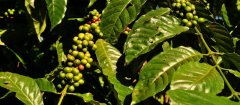
Costa Rican coffee has full granules, ideal acidity and unique strong flavor.
High-quality Costa Rican coffee is called extra hard beans, and this kind of coffee can grow at an altitude of more than 1500 meters. Altitude has always been a problem for coffee growers. The higher the altitude, the better the coffee beans, not only because the higher altitude can increase the acidity of the coffee beans and thus increase the flavor, but also because the night temperature at the higher altitude is lower, the trees can grow slowly.

Introduction to the history and characteristics of mocha coffee
Mocha coffee is produced in Ethiopia. Beans are small and fragrant, with strong sour and mellow taste, moderate sweetness and special flavor. Washed coffee beans are well-known high-quality coffee, often drunk on a single basis. However, if mixed coffee can be blended, it is an ideal comprehensive coffee with ideal flavor. The characteristics of mocha coffee Ethiopia, known as the birthplace of coffee, has a history and tradition that can be called the origin of coffee.

Introduction to the flavor of fine coffee in Costa Rican coffee manor area with ideal acidity and unique strong flavor
The newly developed villa sarchi planting, breeding and quality inspection research institutions, in addition, it also has 10 hectares of experimental plots, planting a number of excellent varieties. Coffee is Costa Rica's main agricultural product, with an annual output of more than 2 million bags (60 kilograms) and foreign exchange earnings of 250 million US dollars, second only to pineapples and bananas. All the coffee trees planted in Costa Rica are Arabica coffee trees.

Coffee training Entrepreneurship Class how to make a profit by opening a Cafe
When a person has an ambitious and expectant vision of opening a coffee shop, they usually think of long queues of customers waiting for coffee and cash registers filled with cash. this fantasy makes them sweet for the industry. However, in fact, this is not the case, the reality is not what they think. According to statistics, 95% of the food retail stores are open
Mocha coffee (Mocha Coffee)
Produced in Ethiopia. Beans are small and fragrant, with strong sour and mellow taste, moderate sweetness and special flavor. Washed coffee beans are well-known high-quality coffee, often drunk on a single basis. However, if mixed coffee can be blended, it is an ideal comprehensive coffee with ideal flavor. Mocha coffee bean origin: Ethiopia (Ethiopia) roasting method: CityRoast characteristics: 1, taste: slightly sweet with soft
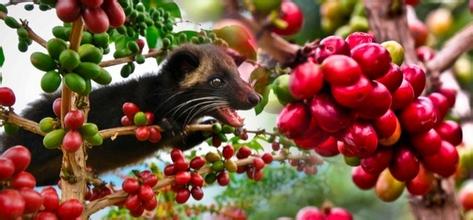
Where is the best place for coffee trees to grow and grow? Requirements for planting conditions of boutique coffee
In botany, coffee trees belong to the evergreen trees of the subgenus Rubiaceae, and coffee beans, commonly known as coffee beans, are actually the seeds of the fruit of coffee trees, just because they are shaped like beans, so they are called coffee beans. Climate is the decisive factor for coffee cultivation. Coffee trees are only suitable for growing in the tropics or subtropics, so north and south latitudes

Mocha coffee (Mocha Coffee) is produced in Ethiopia
Produced in Ethiopia. Beans are small and fragrant, with strong sour and mellow taste, moderate sweetness and special flavor. Washed coffee beans are well-known high-quality coffee, often drunk on a single basis. However, if mixed coffee can be blended, it is an ideal comprehensive coffee with ideal flavor. Mocha coffee bean origin: Ethiopia (Ethiopia) roasting method: CityRoast characteristics: 1, taste: slightly sweet with soft
Premium coffee beans recommend mocha coffee (Mocha Coffee)
Produced in Ethiopia. Beans are small and fragrant, with strong sour and mellow taste, moderate sweetness and special flavor. Washed coffee beans are well-known high-quality coffee, often drunk on a single basis. However, if mixed coffee can be blended, it is an ideal comprehensive coffee with ideal flavor. Mocha coffee bean origin: Ethiopia (Ethiopia) roasting method: CityRoast characteristics: 1, taste: slightly sweet with soft

Costa Rican Coffee with full grains and ideal acidity Coffee flavor and taste of Saint Roman Manor
The seven provinces are: Alajuela Alajuela (central, northwest of San Jose), Catago Cartago (central, east of San Jose), Guanacaster Guanacaste (northwest), Eredia Heredia (central, north of San Jose), Limon Limn (east, along the Caribbean), Pentalenas Puntarenas (west, along the Pacific Ocean), San Jose San

Ethiopian coffee beans mocha coffee boutique coffee beans
Produced in Ethiopia. Beans are small and fragrant, with strong sour and mellow taste, moderate sweetness and special flavor. Washed coffee beans are well-known high-quality coffee, often drunk on a single basis. However, if mixed coffee can be blended, it is an ideal comprehensive coffee with ideal flavor. Mocha coffee bean origin: Ethiopia (Ethiopia) roasting method: CityRoast characteristics: 1, taste: slightly sweet with soft